Case Study
Bringing Formal Credit to India's Informal Economy
Bringing Formal Credit to India's Informal Economy
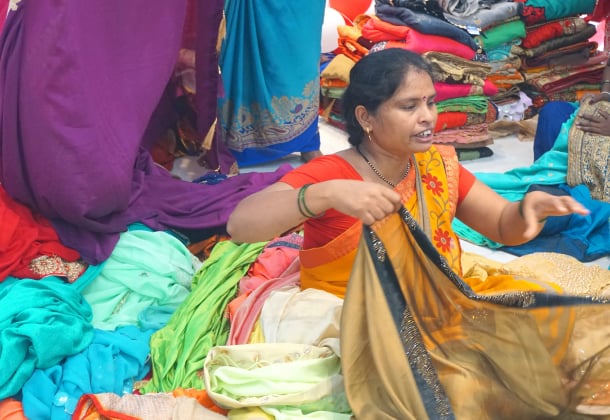
Steady income, no way to prove it. A smallholder farmer in Maharashtra, a dairy owner in Bihar, a tailor running her own business: they have steady cash flows, loyal customers, and real ambitions, yet three in four rural adults in India still rely on informal credit. Conventional credit models struggle to assess seasonal, informal, or undocumented incomes. The problem is not necessarily creditworthiness, but the lack of ways to assess it.
A credit score built for informal incomes. Kaleidofin was founded in 2017 by Sucharita Mukherjee and Puneet Gupta, later joined by co-founders Natasha Jethanandani and Vipul Sekhsaria, with the aim of building simple, well-designed financial solutions for India’s roughly 600 million underbanked customers. The Chennai-based company, backed by investors including the Michael and Susan Dell Foundation, the Bill and Melinda Gates Foundation’s Strategic Investment Fund, Oikocredit, and Rabo Partnerships, developed ki score, an AI-based credit assessment model built specifically for informal-sector customers, analysing over 1,500 data points to generate a more holistic view of borrower risk than conventional models allow.
From nano loans to climate resilience. Built on this infrastructure is a suite of financial products tailored to underserved segments: nano business loans, agri and dairy finance, dedicated lending for women-owned nano enterprises, and insurance products such as cattle and life cover. More recently, Kaleidofin integrated a climate-risk module into ki score, drawing on over 14 years of historical weather data to assess borrowers’ exposure to rainfall variability, extreme heat, and cyclones, extending the model from financial risk into climate resilience.
Keep exploring
Explore more case studies
Meet more of the businesses turning capital into outcomes across India.